
Greenway Vision Studio provides keratoconus care in Raleigh with a measured, doctor-led approach focused on clarity, comfort, and long-term eye health.
Keratoconus Treatment in Raleigh

What Keratoconus Is and Why It Changes Vision
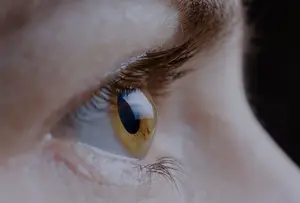
Keratoconus is a condition where the cornea gradually becomes thinner and more cone-shaped. Because the cornea helps focus light, changes in its shape can cause vision to become irregular. Many patients notice that prescriptions change more often or that vision stays “not quite clear” even with updated glasses.
A large international meta-analysis published in Cornea estimated that keratoconus affects roughly 1.4 in every 1,000 people. At Greenway Vision Studio, the focus is less on the number itself and more on what your individual measurements show. Careful evaluation and monitoring help Dr. Handschumacher understand how the cornea is behaving over time and what that means for your vision.
The most important first step is an accurate evaluation that establishes a clear picture of your corneal shape and vision.

Common Signs Patients Notice
Keratoconus does not affect everyone the same way, but many patients describe a pattern in which vision becomes harder to stabilize. Common concerns include:
-
Blurry or distorted vision that changes frequently
-
Ghosting or double images, especially at night
-
Increasing astigmatism or “unusual” prescription shifts
-
Glare, halos, or reduced night driving confidence
-
Vision that does not sharpen fully with standard lenses
If these concerns sound familiar, a careful corneal evaluation helps clarify whether keratoconus is present and what level of correction is most appropriate.
How an Optometrist Evaluates Keratoconus
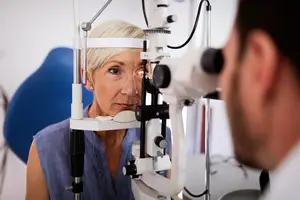
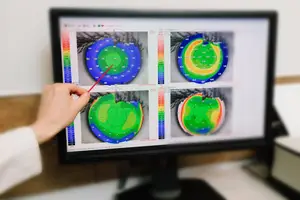
A keratoconus evaluation focuses on the cornea's shape and how that shape affects vision quality. The eye doctor uses targeted testing to understand whether vision changes are driven by corneal irregularity and whether the pattern suggests progression.
At Greenway Vision Studio, findings are explained clearly and directly. Patients understand what is being measured, what it means for daily vision, and what options are most likely to improve stability and comfort.
Why Standard Lenses Often Fall Short
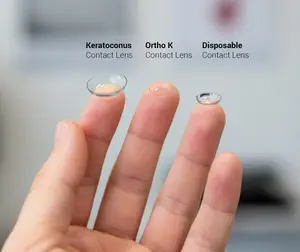
Glasses and standard soft contact lenses can correct many prescriptions, but keratoconus creates an irregular corneal surface that often requires a more specialized optical solution. When the surface is uneven, vision can remain unstable even with a “correct” prescription.
For many patients, the goal shifts from simply updating the prescription to restoring clearer, more stable optics across the entire visual field.
Why Scleral Lenses Are Often the Next Step
Scleral lenses are commonly recommended for keratoconus because they create a smooth optical surface in front of the cornea. Instead of relying on the cornea's irregular shape for vision correction, scleral lenses vault the cornea and provide the stability that standard lenses often cannot.
Patients considering scleral lenses often want two things: better clarity and better comfort. When fitted correctly and monitored thoughtfully, scleral lenses can provide a meaningful improvement in visual reliability for keratoconus and other corneal irregularities.

What Patients Can Expect From Greenway Vision Studio
Keratoconus management works best when care is consistent and guided by clinical judgment. The eye doctor evaluates changes over time, explains options with realistic expectations, and recommends a solution that aligns with both the condition and the patient’s daily demands.
This approach tends to suit patients who value precision, long-term oversight, and a plan that holds up beyond the first visit.

Explore Our Specialty Contact Lenses
If keratoconus is affecting vision clarity or comfort, the next step is often a scleral lens consultation to determine candidacy and expected outcomes. Greenway Vision Studio offers doctor-led guidance for patients exploring scleral lenses in Raleigh, with a process designed around accuracy and follow-through.
Keratoconus FAQs
It can progress, but the rate of change varies from person to person. Some corneas remain relatively stable, while others change more noticeably over time.
Regular monitoring gives Dr. Handschumacher a way to compare findings and recognize when the condition is changing rather than relying on prescription changes alone.
Family history can increase the likelihood of developing keratoconus, although having a relative with the condition does not mean you will necessarily develop it.
If keratoconus runs in your family and you have noticed frequent prescription changes or unusual distortion, mention that history during your eye exam.
No. Many people manage their vision with glasses or specialty contact lenses, depending on the severity and stability of their keratoconus.
If testing shows progression or a concern that requires treatment beyond what Greenway Vision Studio provides, Dr. Handschumacher can explain the findings and coordinate a referral to the appropriate specialist.
There is an adjustment period, especially if you have never worn scleral lenses before. Learning how to insert, remove, and care for them is part of the fitting process.
Comfort and vision are also checked during follow-up visits so the fit can be evaluated rather than assuming the first lens is automatically the final one.
There is no single follow-up schedule for everyone. How often you should be seen depends on factors such as your age, corneal findings, vision changes, and whether the condition appears stable or is progressing.
Dr. Handschumacher will recommend follow-up based on what your measurements show over time.